
By Ali Rabiu Ali, Dutse
On a quiet Tuesday morning in Dutse, clusters of Arabic and Islamic Studies teachers filed into the New State Secretariat with notebooks in hand and expectations high.
Some had travelled from remote communities, others from long-established schools in urban centres. What united them was a shared concern: how to keep pace with a rapidly changing curriculum and the demands of modern classrooms.
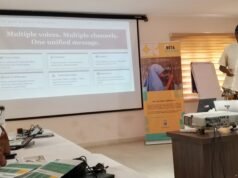
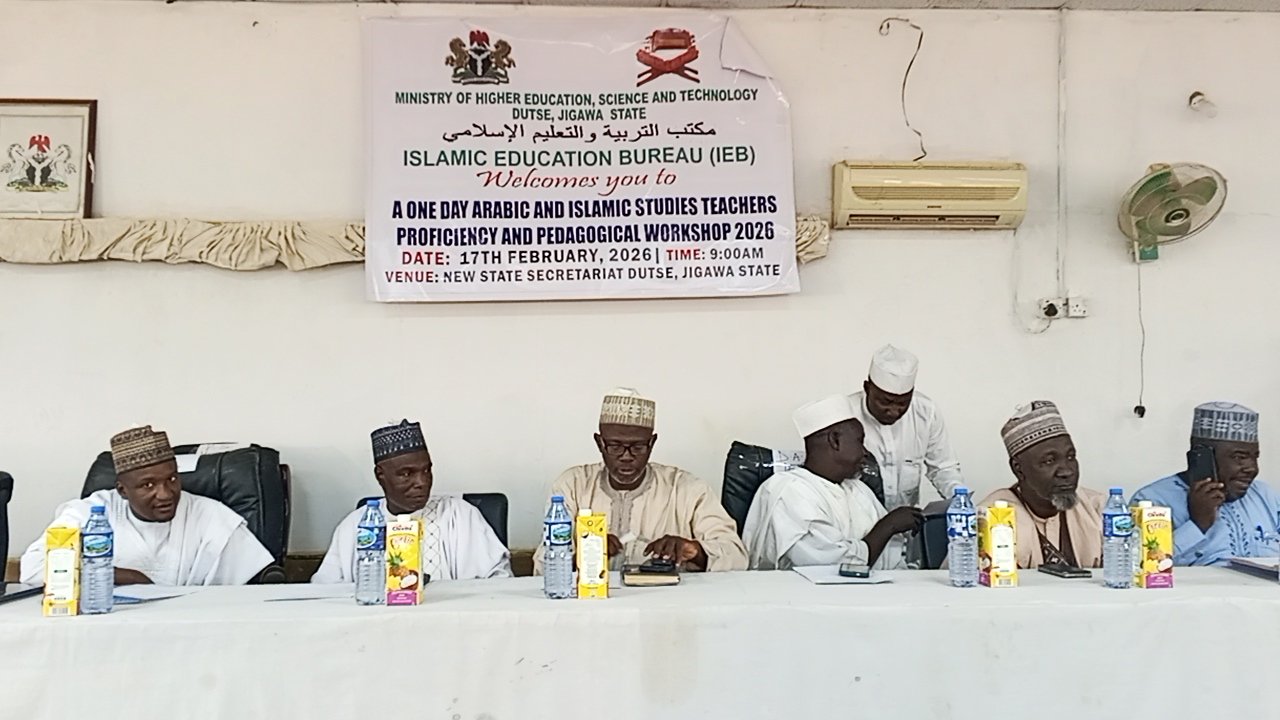
That concern formed the heartbeat of a one-day capacity-building workshop organised by the Jigawa State Ministry for Higher Education, Science and Technology through its Islamic Education Bureau. For many of the nearly 360 participants, the gathering was more than a routine seminar it was a rare opportunity to pause, reflect, and relearn.
Held at the New State Secretariat in Dutse, the Arabic and Islamic Studies Teachers Proficiency and Pedagogical Workshop was designed to confront a reality educators quietly acknowledge: while passion for teaching remains strong, methods must evolve.
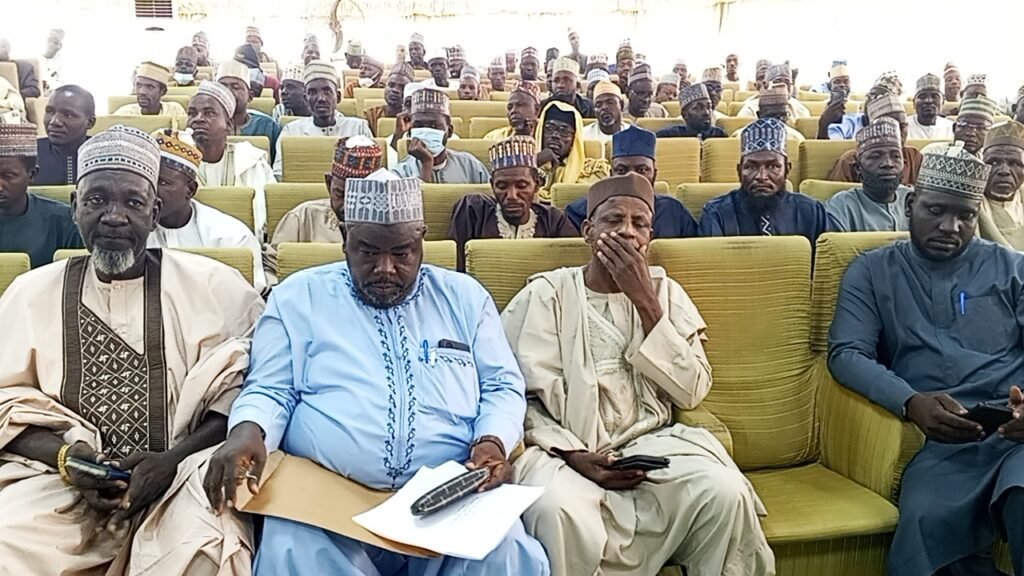
In his welcome address, the Director of Arabic Schools Services struck a candid tone. He acknowledged that the teaching workforce is diverse some educators are well grounded in modern pedagogy, while others were trained under older systems that offered little exposure to learner-centred instruction.
“The gap is real,” he noted, explaining that the workshop was intentionally structured to help teachers update their skills and adjust to new subject combinations and assessment styles.
Teachers listened intently as the Executive Secretary of the Jigawa Education Research and Assessment unpacked the revised national curriculum. Using practical examples, he outlined what had changed, what was expected, and why proper understanding of the reforms was critical if Jigawa’s schools were to remain competitive nationwide.
For many participants, this session was a turning point. The new curriculum, they learned, is not just about content but about how knowledge is delivered, assessed, and applied.
Adding a national perspective, representatives of the National Board for Arabic and Islamic Studies walked participants through approved subject combinations and certification requirements. Questions flowed freely about accreditation, standardisation, and how schools could avoid falling outside regulatory frameworks.
Beyond policy discussions, the workshop delved into the classroom itself. Three technical papers explored effective teaching strategies, learner-centred approaches, and modern assessment techniques.
The interactive question-and-answer session that followed allowed teachers to voice everyday challenges from managing mixed-ability classes to adapting traditional texts to contemporary realities.
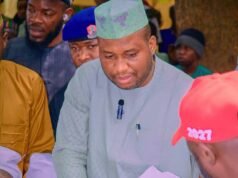
Speaking on the sidelines, Salih Umar, Director of Monitoring and Evaluation at the Islamic Education Bureau, described the workshop as part of a broader effort to strengthen accountability and professionalism.
“Some teachers are qualified, others still need capacity building,” he said. “That is why we organise these programmes regularly—so teachers can understand their responsibilities and adopt modern teaching and learning techniques.”
For Usman Muhammad Ismail, Director of Government Arabic School and Acting Chairman of the Arabic School Forum of Jigawa State, the impact was immediate.
“We are very happy that our schools are not left behind in the ongoing changes,” he said. “What we learned here will go straight back into our classrooms. It gives us confidence that Arabic and Islamic schools in Jigawa can stand proudly with others across the country.”
As the programme drew to a close, special prayers were offered in honour of M. Shisu Ibrahim, the State Musabaqa Coordinator—a reminder that education in Jigawa is as much about values as it is about skills.
By the time participants dispersed, the atmosphere had shifted. What began as a technical workshop ended as a renewed commitment to growth.
For Jigawa’s Arabic and Islamic Studies teachers, the day marked not just training, but a quiet recalibration of purpose one that places quality teaching at the centre of the state’s educational future.