

By Editor
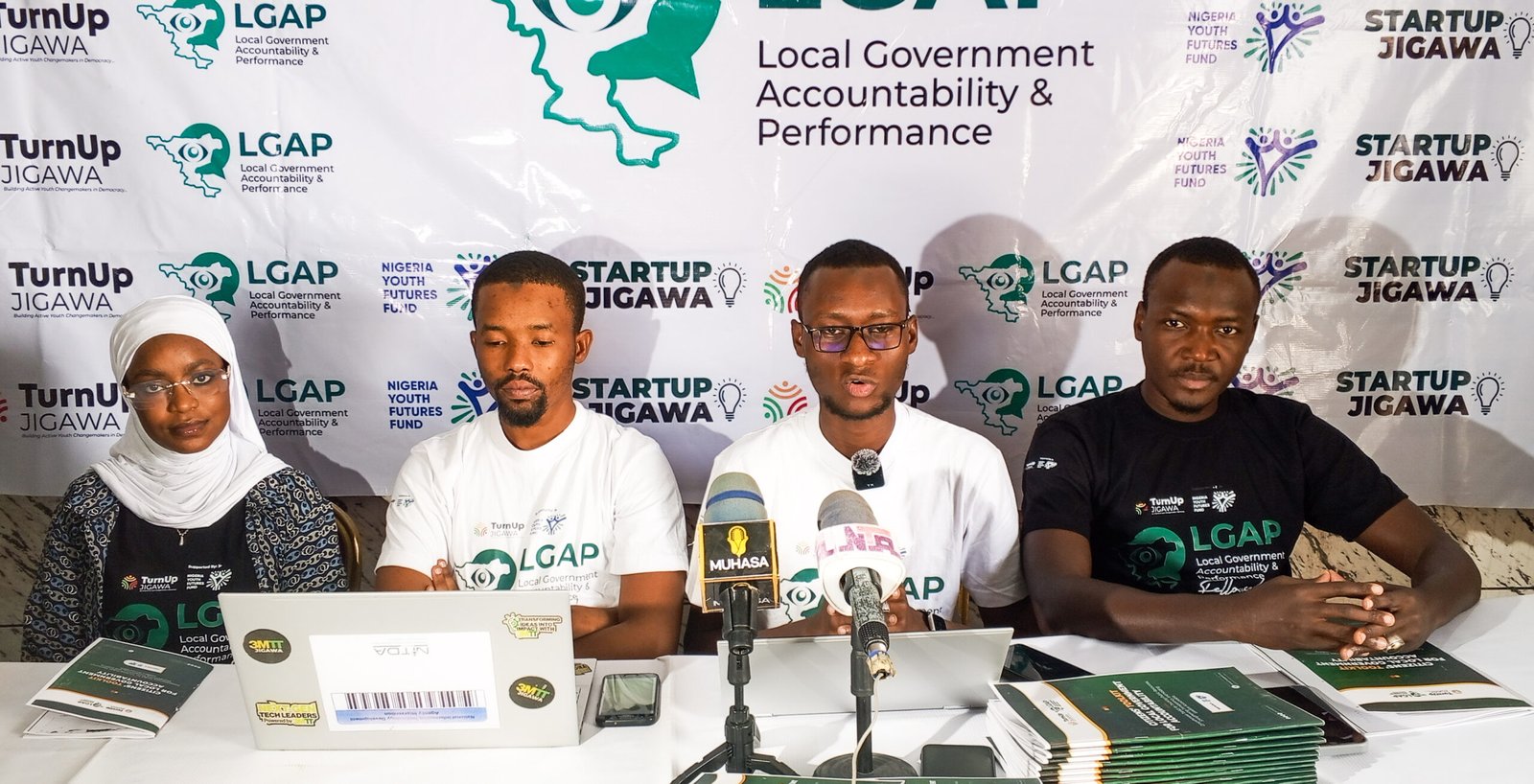
TurnUp Jigawa, under its Youth4Local Government Accountability Project (Youth4LGAP), has launched a Citizens’ Toolkit for Local Government Accountability and concluded a fellowship workshop aimed at empowering young people to promote transparency and effective governance at the grassroots.
Speaking during a press briefing in Dutse, Ahmad Abubakar, executive Director of TurnUp Jigawa, said the initiative was designed to bridge the gap between citizens and local government authorities by equipping communities with practical tools to track public resources and demand accountability.
Abubakar explained that local governments, as the tier of government closest to the people, are responsible for essential services such as primary healthcare, basic education, water and sanitation, rural roads and local markets.
However, he noted that many citizens lack adequate understanding of how local councils operate, how funds are allocated, and how to engage leaders when services fail.
“Over time, this information gap has contributed to weak oversight, low citizen participation and poor service delivery in many communities,” he said. “At TurnUp Jigawa, we believe that strengthening democracy must begin at the local government level, with informed and empowered citizens.”
According to him, the recently concluded Youth4LGAP Fellowship Workshop brought together 54 young fellows drawn from different local government areas across Jigawa State.
The participants were selected based on their commitment to community development and interest in governance and civic engagement.
During the workshop, the fellows received training on the structure and functions of local government councils, budget processes and public expenditure tracking, social accountability tools, advocacy strategies, documentation and responsible media engagement, as well as leadership and ethics.
He added that participants also developed community accountability action plans, identifying challenges in their localities and outlining steps to monitor projects, engage duty bearers and mobilize citizens around service delivery issues.
“These young people are returning to their communities not just with passion, but with practical skills and strategies for constructive engagement with public officials,” Abubakar said.
On the newly launched Citizens’ Toolkit for Local Government Accountability, the Executive Director described it as a user-friendly guide designed for youth groups, community-based organisations, traditional leaders, civil society groups and concerned citizens.
The toolkit, he said, provides guidance on understanding local government decision-making processes, tracking budgets and projects, identifying red flags in public spending, organizing lawful community engagements, writing petitions, engaging the media and using data to support advocacy.
“In simple terms, the toolkit translates governance from technical language into everyday community action,” he noted.
Abubakar stressed that the initiative comes at a critical time when many citizens, particularly young people, feel disconnected from governance due to economic hardship, unemployment and insecurity.
“This project is not about attacking government. It is about strengthening governance through informed participation and constructive accountability,” he said.
He also called on the media to partner with TurnUp Jigawa by highlighting community-level governance issues, following up on local government projects and amplifying citizens’ voices responsibly.
The organisation appreciated its partners, facilitators and volunteers for their support, while charging the Youth4LGAP fellows to uphold integrity and responsible engagement as they implement their action plans.
Abubakar concluded that the launch of the toolkit represents a renewed commitment to grassroots democracy, where informed citizens actively engage leaders for improved service delivery and development.