
By Ali Rabiu Ali, Dutse
Governor Malam Umar A. Namadi has announced that the Jigawa State Government has expanded the National Home-Grown School Feeding Programme to cover pupils in Primary Four, Five and Six, making the state the first in Nigeria to complement the Federal Government’s implementation of the initiative beyond the lower primary classes.
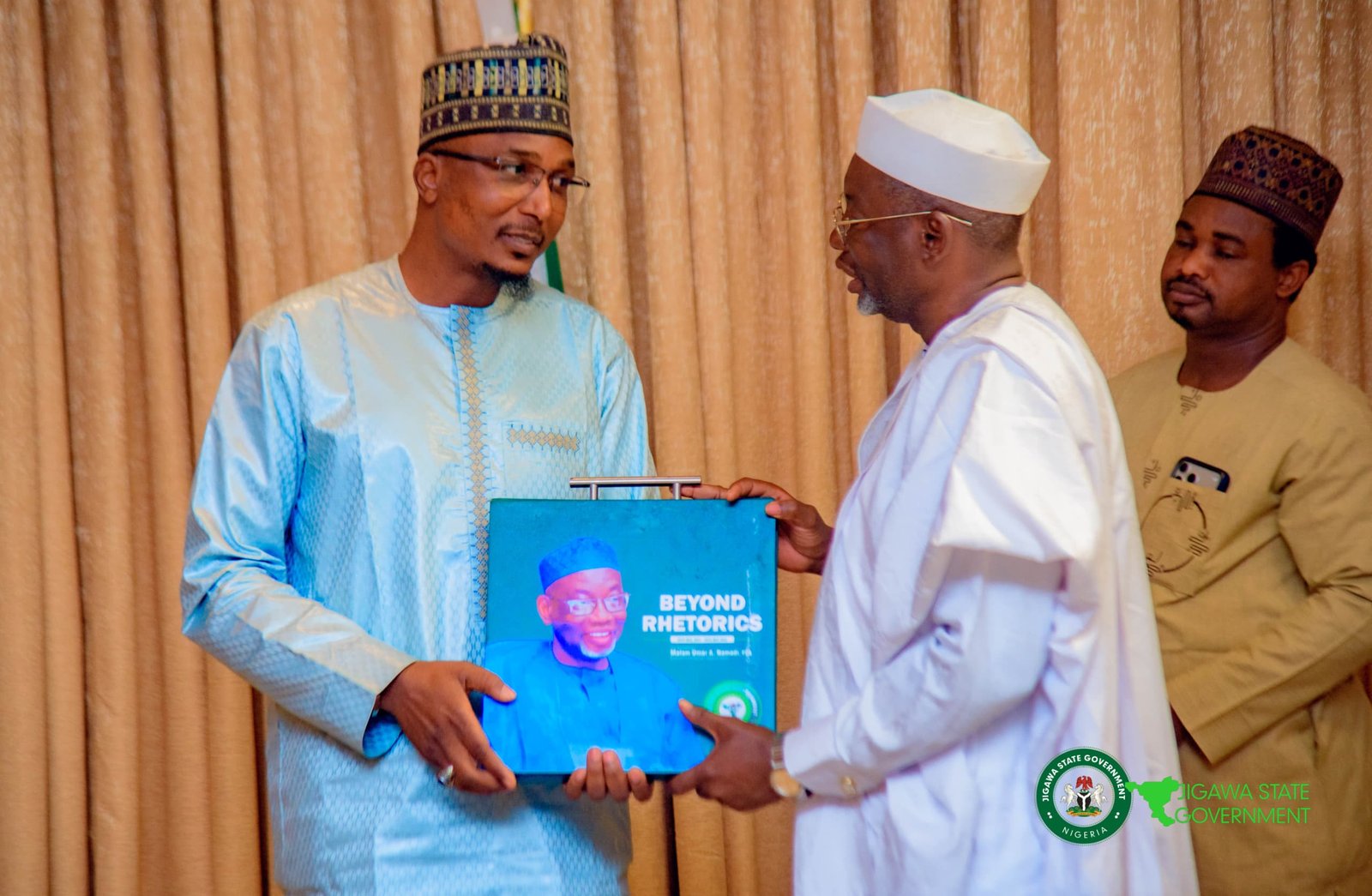
The governor disclosed this on Tuesday while receiving members of the North-West Strategic Committee on the National Social Investment Programme (NSIP), led by its Chairman, Professor Mudassir Nasiru, during a courtesy visit to the Government House in Dutse.
The committee is touring states across the North-West to encourage greater ownership and improved implementation of the National Social Investment Programme through stronger collaboration between the federal and state governments.
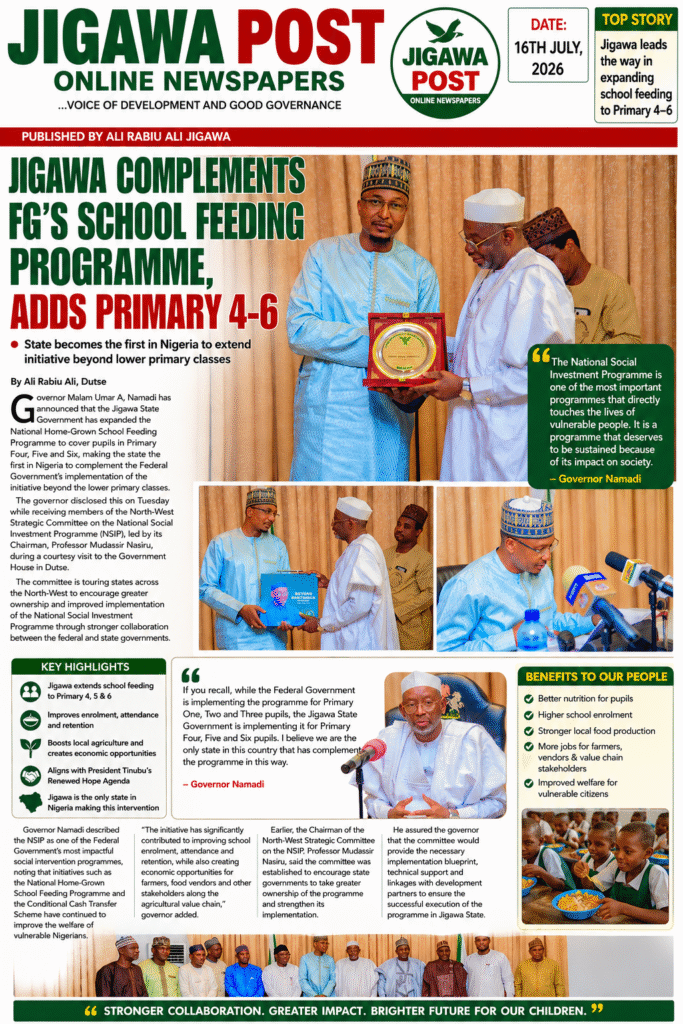
Governor Namadi described the NSIP as one of the Federal Government’s most impactful social intervention programmes, noting that initiatives such as the National Home-Grown School Feeding Programme and the Conditional Cash Transfer Scheme have continued to improve the welfare of vulnerable Nigerians.
“The National Social Investment Programme is one of the most important programmes that directly touches the lives of vulnerable people. It is a programme that deserves to be sustained because of its impact on society,” the governor said.
He explained that while the Federal Government currently provides school meals for pupils in Primary One, Two and Three, the Jigawa State Government has extended the programme to include pupils in Primary Four, Five and Six to ensure continuity and wider access to the benefits.
According to him, Jigawa remains the only state in the federation to make such an intervention.
“If you recall, while the Federal Government is implementing the programme for Primary One, Two and Three pupils, the Jigawa State Government is implementing it for Primary Four, Five and Six pupils. I believe we are the only state in this country that has complemented the programme in this way,” he stated.
Governor Namadi said the initiative has significantly contributed to improving school enrolment, attendance and retention, while also creating economic opportunities for farmers, food vendors and other stakeholders along the agricultural value chain.
He added that improving the welfare of vulnerable citizens remains a key priority of his administration under its 12-Point Agenda and aligns with President Bola Ahmed Tinubu’s Renewed Hope Agenda.
“Whatever comes as part of the Renewed Hope Agenda, the Jigawa State Government is ready to key into it,” he assured.
The governor further pledged that the state government would carefully study the committee’s implementation roadmap and adopt appropriate measures to ensure the effective and sustainable implementation of the programme.
Earlier, the Chairman of the North-West Strategic Committee on the National Social Investment Programme, Professor Mudassir Nasiru, said the committee was established to encourage state governments to take greater ownership of the programme and strengthen its implementation.
He explained that the NSIP, introduced during the administration of former President Muhammadu Buhari and now coordinated by the Federal Ministry of Humanitarian Affairs and Poverty Reduction, consists of several interventions designed to improve the livelihoods of vulnerable households nationwide.
Professor Nasiru said the revised implementation framework for the National Home-Grown School Feeding Programme would not only improve food security and boost school enrolment but also stimulate agricultural production and economic activities across the food value chain.
He assured the governor that the committee would provide the necessary implementation blueprint, technical support and linkages with development partners to ensure the successful execution of the programme in Jigawa State.