
By Ali Rabiu Ali, Dutse
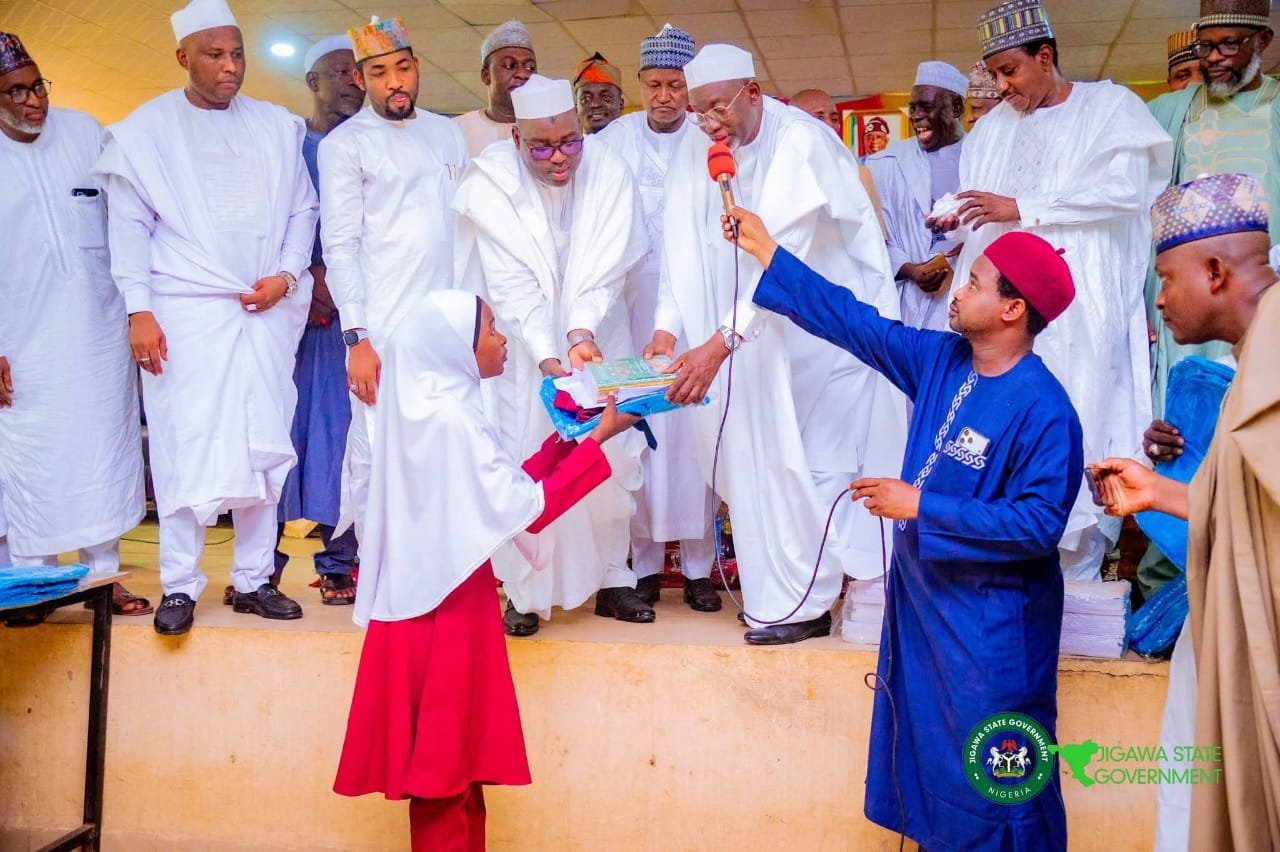
The Jigawa State Government has flagged off the distribution of educational support materials to female students in post-basic schools across the state as part of efforts to improve school attendance, retention and learning outcomes.
Speaking at the flag-off ceremony held on Friday 21st August, 2026 in Jahun, Jigawa State Governor, Mallam Umar Namadi, FCA, said the intervention was designed to reduce gender disparity in education and create a more conducive learning environment for girls.
The governor said education remained at the heart of his administration’s vision for a “Greater Jigawa”, describing investment in the sector as a strategic investment in the future of the state.
According to him, the government was committed to improving school infrastructure, strengthening teacher quality, supporting vulnerable learners and expanding opportunities for girls.
Namadi said the intervention was also aimed at reducing the financial burden on parents and encouraging families to keep their children in school.
He said the government was particularly concerned about barriers confronting the girl-child, including poverty, distance, social exclusion and inadequate access to essential educational materials.
The governor said Jigawa recorded 1,642,807 learners across 4,568 reporting schools, according to the 2024 Annual School Census, with a learner-teacher ratio of 63.6:1 and learner-classroom ratio of 77.6:1.
He added that female learners constituted about 49.5 per cent of total enrolment, stressing that the figures demonstrated the growing demand for education and the need for further investment in schools and teachers.
“Although the latest 2025 Annual School Census, yet to be published, shows improvement, these figures confirm strong and growing demand for education in our state,” he said.
Namadi further acknowledged the challenge of out-of-school children, saying his administration was determined to address the factors responsible for children being excluded from the formal education system.
He said the government had taken steps to improve the pupil-teacher ratio through recruitment of qualified teachers, continuous training and retraining, improved teacher deployment, construction and rehabilitation of schools, provision of learning materials and strengthening of supervision.
The governor announced that the current intervention would provide 48,300 school uniforms, 15,000 school bags, 40,000 sanitary pads, 4,000 sets of writing materials and 40,000 exercise books to female students at the post-basic level.
He explained that the items were selected based on the practical needs of students, particularly adolescent girls, and would help promote regular attendance, dignity and improved learning outcomes.
“When a girl is educated, the benefit goes beyond the individual child. It improves family health, strengthens household income, and contributes to society’s overall development,” the governor said.
Namadi disclosed that the government had also awarded contracts for the supply of similar educational support materials to learners at the basic education level.
He said the intervention included 22,500 sets of school uniforms for Junior Secondary Schools and 11,000 sets for nomadic schools, alongside other learning-support items such as school bags, sandals, school boxes and exercise books.
He directed relevant government agencies to ensure transparency, proper targeting and timely distribution of the materials to intended beneficiaries across the state.
The governor also announced that the government would provide 3,800 school uniforms for Almajiris in integrated Tsangaya schools through the Tsangaya Education Board.
He said the initiative formed part of the administration’s broader reform of Qur’anic and Tsangaya education, aimed at combining moral and Qur’anic learning with literacy, numeracy, life skills and productive citizenship.
Namadi called on parents, teachers, traditional rulers, religious leaders, school-based management committees, civil society organisations and development partners to support the government’s education initiatives.
He urged beneficiaries to take their studies seriously and protect the materials provided to them.
The governor reaffirmed that his administration would continue to invest in teachers, classrooms, learning materials, girl-child education, inclusive education and Tsangaya reforms.
He said the ultimate objective was to ensure that every child in Jigawa had a fair opportunity to learn, develop and contribute to the development of the state.