
By Ali Rabiu Ali, Dutse
The Jigawa State Government has set a target of reducing learning poverty among pupils in basic schools to less than 10 per cent by 2031.
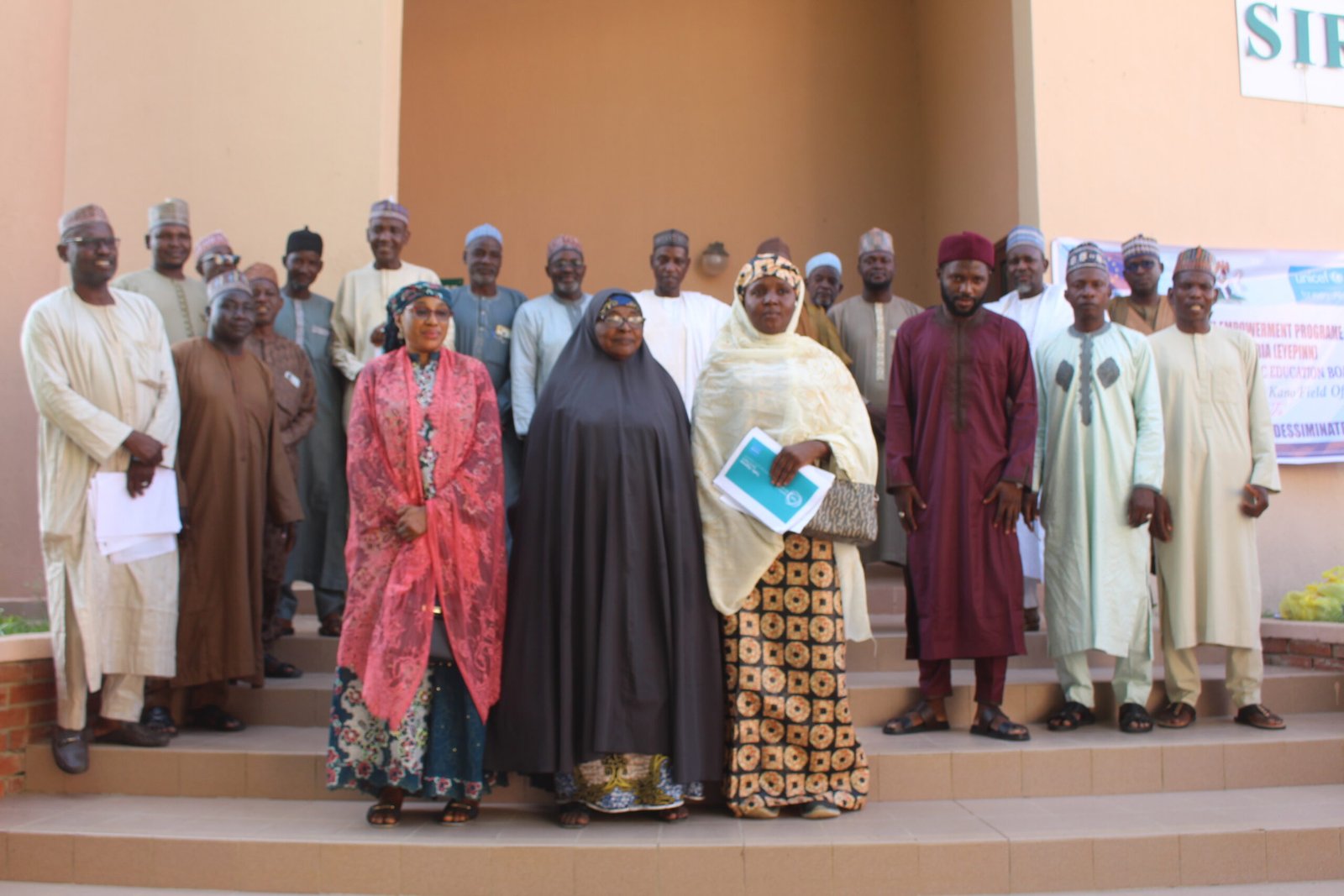
The Hon. Chairman of the Jigawa State Universal Basic Education Board (SUBEB), Professor Haruna Musa stated this on Monday 7th September, 2026 in Dutse during the dissemination of the Teaching at the Right Level (TaRL) Endline Assessment conducted under the Education and Youth Empowerment Programme in Northwestern Nigeria (EYEP-NW), implemented by the Jigawa State Universal Basic Education Board in collaboration with the UNICEF Kano Field Office.
The dissemination meeting was held at the Ahmadu Bello Hall, Jigawa State Secretariat, Dutse, where education stakeholders reviewed the progress, challenges and prospects of the TaRL intervention in the state.
The SUBEB Chairman said the assessment had provided important evidence on the current state of learning among pupils, noting that the government was determined to address gaps in literacy and numeracy across basic schools.
According to him, the current level of learning poverty in the focal Local Government Areas supported by development partners stood at about 56.7 per cent, which he described as unacceptably high.
He, however, expressed confidence that the figure could be substantially reduced through deliberate interventions, stronger monitoring and the collective commitment of government, teachers, communities and development partners.
“We are trying to reduce learning poverty in the state. That means the number of non-numerate and non-literate learners is what we are trying to reduce as much as we can.
“The commitment is that we want to reduce it to a minimum, less than 10 per cent. This is what we intend to do by the year 2031,” Professor Musa said.
He added that the long-term ambition was to ultimately eliminate learning poverty in the state, stressing that no child should spend several years in school without acquiring basic reading, writing and numeracy skills.
Professor Musa said Governor Umar Namadi was passionate about improving learning outcomes and had demonstrated strong commitment towards transforming the education sector.
He said the administration was working towards ensuring that every naira invested in education translated into measurable learning outcomes.
“Learning poverty is never a wanted situation where a learner stays in school for six years without learning how to read, how to write, or even how to solve simple arithmetic.
“We are really committed. We are the front seat, we are the drivers of this, and we are going to make sure that the ambition of His Excellency is fulfilled before he hands over in 2031, Insha Allah,” he said.
The SUBEB boss described the Teaching at the Right Level (TaRL) approach as an important remediation programme for addressing learning gaps among pupils.
He explained that the programme was designed to help pupils overcome deficiencies in basic literacy and numeracy by teaching them according to their actual learning levels rather than simply their age or grade.
“TaRL is a remediation programme. Especially, we have learning gaps in our schools and we are trying to see how we can cover the learning gaps.
“There is no other way you can do it without using TaRL. TaRL is a proven methodology. So many countries are using it and we are also using it,” he said.
Professor Musa said the results so far had been promising, adding that the state government intended to sustain and strengthen the programme to achieve greater impact.
The endline assessment also identified several challenges affecting the implementation of the programme in some participating Local Government Areas.
One of the major challenges was pupil and teacher absenteeism and late arrival at schools, particularly following the commencement of the farming season.
According to the assessment report, the situation affected the early commencement of the ELA assessment exercise in some schools.
The report also identified gaps in the capacity of some teachers and mentors, noting that some were still struggling with mastery of the assessment methodology.
Another challenge was inadequate monitoring and mentoring support visits by state partners.
Stakeholders seek stronger monitoring
To address the identified challenges, stakeholders recommended greater involvement of School-Based Management Committees (SBMCs) in encouraging parents to ensure that their children attend school regularly and on time.
Local Council Education Authorities (LCEAs) were also urged to encourage teachers to report to school early and maintain regular attendance.
The stakeholders further recommended the development of a strategy to ensure that mentors, particularly Senior School Officers (SSOs), became more actively involved in monitoring and mentoring activities.
They also called for refresher training for SSOs, Head Teachers and teachers across all focal LGAs to strengthen their understanding and implementation of the TaRL assessment methodology.
Professor Musa also stressed the importance of community participation in improving education outcomes.
He said the state government wanted communities to regard schools as their own properties and take responsibility for protecting, supporting and monitoring them.
He said traditional leaders, parents, teachers, education administrators and other stakeholders must work together to improve learning outcomes.
According to him, the government was also taking steps to strengthen teacher accountability, stressing that teachers must not only be present in schools but must also deliver effective lessons.
“We are trying to hold teachers accountable so that they are in school. Not just in school, they should be teaching. Not only teaching, they should make sure that they deliver effective lessons so that there will be learning outcomes.
“Learning outcome is the key. Every naira spent in education should be translated into learning outcomes,” he said.
The SUBEB boss commended UNICEF, development partners and other stakeholders for their support, stressing that the state would continue to collaborate with them in addressing challenges confronting basic education.
He called for sustained commitment from all stakeholders towards achieving the state’s education targets and ensuring that children acquire the foundational skills needed to progress in their education.
The TaRL Endline Assessment dissemination therefore provided an opportunity for Jigawa education authorities, development partners, teachers and other stakeholders to assess progress, identify outstanding challenges and agree on strategies for strengthening the programme and improving learning outcomes across the state.