
By Ali Rabiu Ali, Jigawa
The Jigawa State Government has pledged to sustain and expand gains recorded under the UK-supported Partnership for Learning for All in Nigeria (PLANE) programme as the initiative transitions from its direct operational presence in the state.
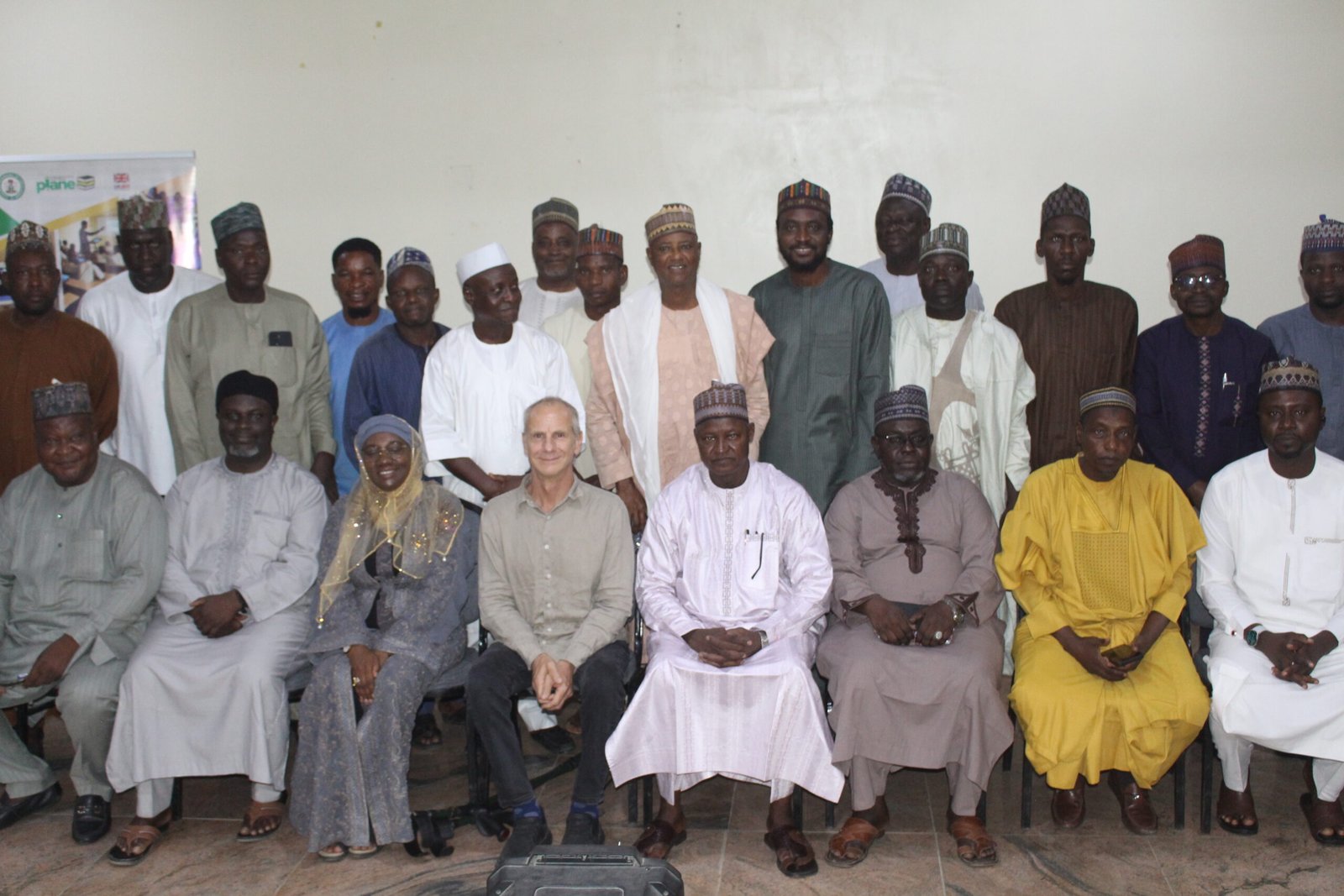
Commissioner for Basic Education, Dr. Lawan Yunusa Danzomo, gave the assurance during a transition workshop attended by senior government officials, education stakeholders and representatives of the British High Commission and PLANE.
Danzomo described the programme as a major intervention that had strengthened foundational literacy and numeracy, teacher capacity and education delivery in Jigawa, but said the immediate priority must now shift to continuity and sustainability.
He commended the UK Foreign, Commonwealth and Development Office (FCDO), PLANE officials and other partners for what he described as a valuable contribution to the development of basic education in the state.
According to him, the programme moved from conception to implementation through a clearly defined operational framework, backed by substantial technical and financial support.
“Transition and continuity are among the most important issues before us,” Danzomo said. “How do we ensure that this programme continues in our schools so that the achievements recorded by PLANE are sustained, built upon and expanded?
“We want our children and pupils to acquire effective literacy and numeracy skills. We know that every programme will eventually come to an end, but what matters now is having concrete plans on the ground for transition, sustainability and continuity.”
The commissioner said Jigawa had already initiated and experimented with education interventions that could complement some of the approaches promoted by PLANE, although several of them had yet to reach every school and every child.
He identified financing, manpower, teacher capacity, learning materials, school attendance, retention, transition and continuity as major challenges requiring sustained government attention.
Danzomo stressed that successful education reform goes beyond designing policies and programmes, noting that implementation at classroom level depends heavily on qualified, competent and motivated teachers.
“You may have a project and you may have a programme, but how do you take it into the schools? How is it translated into actual and practical activities in the classroom?” he asked.
“You need teachers. The teachers must have the knowledge and competence to do the work. You need materials, teacher presence in schools, pupil attendance, retention, transition and continued support.”
The commissioner acknowledged that changes in global financing priorities had affected international development assistance, saying conflicts, economic pressures and rising global commodity and energy costs had forced development partners to reconsider funding strategies.
He nevertheless expressed optimism that the FCDO would continue to engage Nigeria and Jigawa through future programmes and technical partnerships.
“We thank you very much for all you have done and for this initiative,” Danzomo said. “We believe that new opportunities and programmes will emerge, and we hope Jigawa will continue to benefit from the partnership.”
In his remarks, Chairman of the Jigawa State Universal Basic Education Board (SUBEB), Professor Haruna Musa, expressed serious concern over the timing of PLANE’s transition, warning that sustaining some of its interventions could be difficult without prior budgetary provision.
Musa said the state education sector still needed the programme’s technical expertise, particularly as new English-language learning materials and structured teaching approaches were being introduced.
“It should not be the end of the partnership. It is sad that you are leaving, especially at this time. We never expected that you would leave now,” he said.
“I have no budget provision to sustain what you have started because the issue came after our budget process. If this had been raised when we were preparing the budget, we would have made provision.
“If there is something that makes me lose sleep at night, it is the exit of PLANE at this particular time. Where do I start from? What am I going to do? You are transitioning at a time when we need you more.”
Despite the concern, the SUBEB chairman described the partnership as a major milestone in Jigawa’s basic education reforms, particularly in capacity building, technical support, teacher development and institutional strengthening.
He said he personally benefited from PLANE-supported capacity development and credited the programme with improving his understanding of basic education administration.
“I sincerely thank you for the capacity building,” Musa said. “When I came here, there were many things I had to learn about basic education. Today, I can say I have learned a lot.”
He explained that his leadership adopted a “system scanning” approach to identify what was working, areas requiring support, leakages in resource utilisation and sectors where available resources could produce better outcomes.
According to him, accountability remains a major challenge in the education system, particularly in ensuring teacher attendance and effective supervision.
Musa said Jigawa would continue to utilise teachers, School Support Officers and education leaders whose capacities had been strengthened under PLANE.
He added that the state would integrate the experience and human resources developed through the programme into home-grown education initiatives.
“Sustainability is now my focus,” he said. “How do I sustain what you have started, especially now that the English materials are being introduced?
“We need to know what we should pay attention to in terms of sustainability. We need to understand the risks involved. I expect a clear roadmap that will guide whatever we are going to do, and we should continue to learn from your technical expertise.”
UK Adviser Explains Funding Shift
Senior Education Adviser at the British High Commission, Ian Attfield, said the transition should be used to examine achievements, lessons and practical steps required to carry successful interventions forward.
He said other education programmes and financing opportunities were emerging, including the HOPE Education Programme and possible future interventions involving international development institutions.
Attfield disclosed that negotiations with the Islamic Development Bank were advancing on a potentially substantive new programme that could include Global Partnership for Education financing and benefit Jigawa and other northern states.
He also explained that although the UK may not always directly finance or implement education interventions at state level, it continues to contribute to major multilateral financing institutions, including the World Bank.
According to him, future development cooperation is increasingly shifting towards strengthening systems, improving institutional capability and encouraging better performance rather than large-scale direct service delivery.
Attfield said the UK remained committed to helping Jigawa and other states learn from successful interventions, particularly in structured pedagogy, textbook procurement, teacher training, learning assessment, quality assurance and climate-resilient school infrastructure.
He said lessons from PLANE could be particularly valuable in ensuring that instructional materials were procured at high quality and effective cost, and distributed to the right schools at the right time.
The senior adviser cited weaknesses in public procurement and distribution systems as areas requiring sustained improvement, noting that education materials must reach intended beneficiaries rather than remain in storage.
Attfield also stressed the importance of maintaining learning communities and professional networks across the North-West, saying Jigawa could continue to exchange knowledge and experience with states such as Kano and Kaduna.
He said such collaboration could strengthen approaches to data management, out-of-school children, education governance and institutional performance.
While acknowledging the concerns of Jigawa officials, Attfield said recent UK budget decisions had forced difficult and unexpected adjustments across several development programmes.
He said the decisions came within a short period around February and March, ahead of the UK financing year beginning in April, forcing officials to make difficult choices.
“We did fight very hard to keep PLANE running,” he said, adding that the British High Commission was exploring ways of maintaining a lighter level of support.
However, he cautioned that the development model was changing and that state political and technical leaders would increasingly have to drive reforms themselves.
“Ultimately, you are the masters and mistresses of your own destiny,” Attfield said.
He explained that while the UK government was unlikely to return to a model of substantial direct funding for routine public primary and secondary education service delivery, including direct purchase of books and materials, it would continue to place value on systems strengthening and institutional capability.
Attfield said technical resources could still become available through programmes such as HOPE, UNICEF-supported interventions, international non-governmental organisations and potentially the Islamic Development Bank.
He added that the UK was also developing centres of expertise that could provide some ad hoc technical support, although such arrangements would not be as immediate as having dedicated PLANE resources based within the programme.
The adviser further highlighted the importance of Accelerated Basic Education for children who, for various reasons, cannot return through the conventional pathway into formal schooling from the early grades.
He said the approach was particularly important across Jigawa and the wider North-West, where large numbers of out-of-school children require complementary and flexible learning opportunities.
Technical Adviser on Basic Education to the Jigawa State Governor, Dr. Hauwa Mustapha Babura, described the moment as a transition rather than an end to the partnership.
She said PLANE had stood beside Jigawa State as a genuine partner in its efforts to transform basic education.
“Today marks not an ending but a transition, and it is one that we approach with deep gratitude rather than sadness,” she said.
“For years, PLANE has stood beside Jigawa State as a true partner in our journey for the transformation of basic education. You did not just come here with prescriptions; you came with partnership.
“You listened to our priorities, strengthened our systems and helped build the capacity of our people so that we could carry the work forward.”
Babura said the programme had contributed significantly to foundational literacy and numeracy, teacher development and stronger systems for monitoring and assessing learning outcomes.
“Your fingerprints are on the progress we have made and will continue to make,” she said.
She noted that the continuation of technical guidance beyond PLANE’s direct physical presence demonstrated that the partnership was built around shared purpose rather than mere proximity.
“On behalf of the Executive Governor, the people of Jigawa State and every officer and teacher whose work you touched, we say thank you,” Babura said.
“Thank you for your professionalism, your humility and your unwavering belief in what Jigawa’s children deserve.
“As you move forward, whether to other states or other chapters, please know that Jigawa carries a piece of this partnership with us. The systems you helped us build will continue to serve our children long after today.
“We do not say farewell to partnership. We say thank you, and until we walk together again.”