

By Ali Rabiu Ali Jigawa.
Leadership is often measured not only by the decisions leaders make during moments of success but also by how they respond to unexpected challenges.
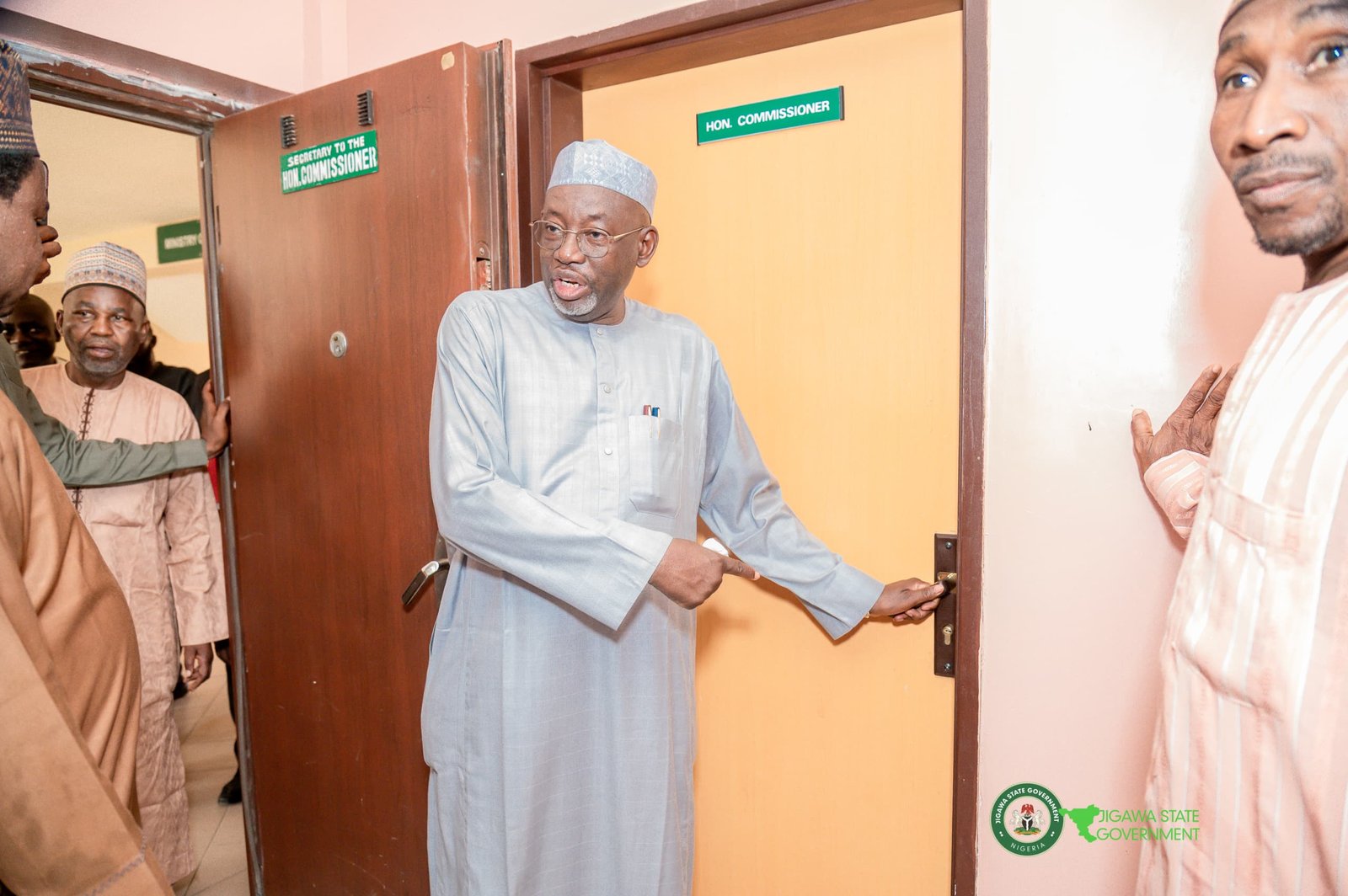
For many observers, Governor Malam Umar A. Namadi demonstrated this principle during his unannounced visit to the Jigawa State Secretariat on Monday morning when he reportedly found several offices either empty or sparsely occupied during official working hours.
The visit, which took place at about 11:00 a.m., immediately attracted public attention. Many expected a harsh reaction from the governor, considering the importance of punctuality and commitment in public service. Instead, Governor Namadi responded with calmness, restraint and maturity-qualities that many residents believe reflect his leadership philosophy.
Rather than issuing immediate sanctions or making emotional public statements, the governor chose a measured approach.
His response has since generated discussions across the state, with many describing it as a demonstration of patience, accountability and confidence in the ability of civil servants to improve.
For many civil servants, the governor’s conduct became a moment of reflection.
Several workers told Skylink Multimedia that the visit served as a wake-up call, reminding them of their responsibility to the people of Jigawa State.
According to some of the workers interviewed, the governor’s decision to exercise restraint instead of anger inspired many employees to reassess their attitude toward work, particularly regarding punctuality and attendance.
One civil servant described the visit as “a silent but powerful message,” noting that the governor did not need harsh words for workers to understand the seriousness of the situation.
Others offered prayers for the governor, praising what they described as his wisdom, self-control and commitment to responsible governance. They expressed hope that his leadership style would continue to encourage reforms within the state’s public service.
Observers also believe that the incident has strengthened discussions about discipline and accountability in government institutions. While enforcement of workplace rules remains important, many argue that leadership through example can sometimes produce lasting behavioural change.
Political analysts say the governor’s handling of the situation has attracted public attention because many expected a more confrontational response. Instead, his calm approach shifted the conversation from punishment to responsibility and institutional improvement.
Good governance is often associated with transparency, accountability and service delivery. Equally important, however, is emotional intelligence-the ability to make difficult decisions without allowing emotions to overshadow long-term objectives. Many supporters believe Governor Namadi displayed these qualities during the visit.
The incident also serves as a reminder that public service is built on trust. Citizens expect government offices to function efficiently, while public servants are entrusted with the responsibility of delivering services promptly and professionally.
Whether viewed as an inspection or simply a routine visit, the governor’s appearance at the secretariat has already had a noticeable impact.
Reports from workers suggest improved punctuality in the days following the visit, although sustained improvement will depend on continued commitment by both management and staff.
As Jigawa State continues its governance and development agenda, the event has become more than a story about empty offices. For many residents, it represents a lesson in leadership one that demonstrates that patience, forgiveness and accountability can be powerful tools for inspiring positive change.
“True leadership is not always demonstrated by punishment, but by the ability to inspire people to do what is right even when no one is watching.”