
By Ali Rabiu Ali Jigawa.
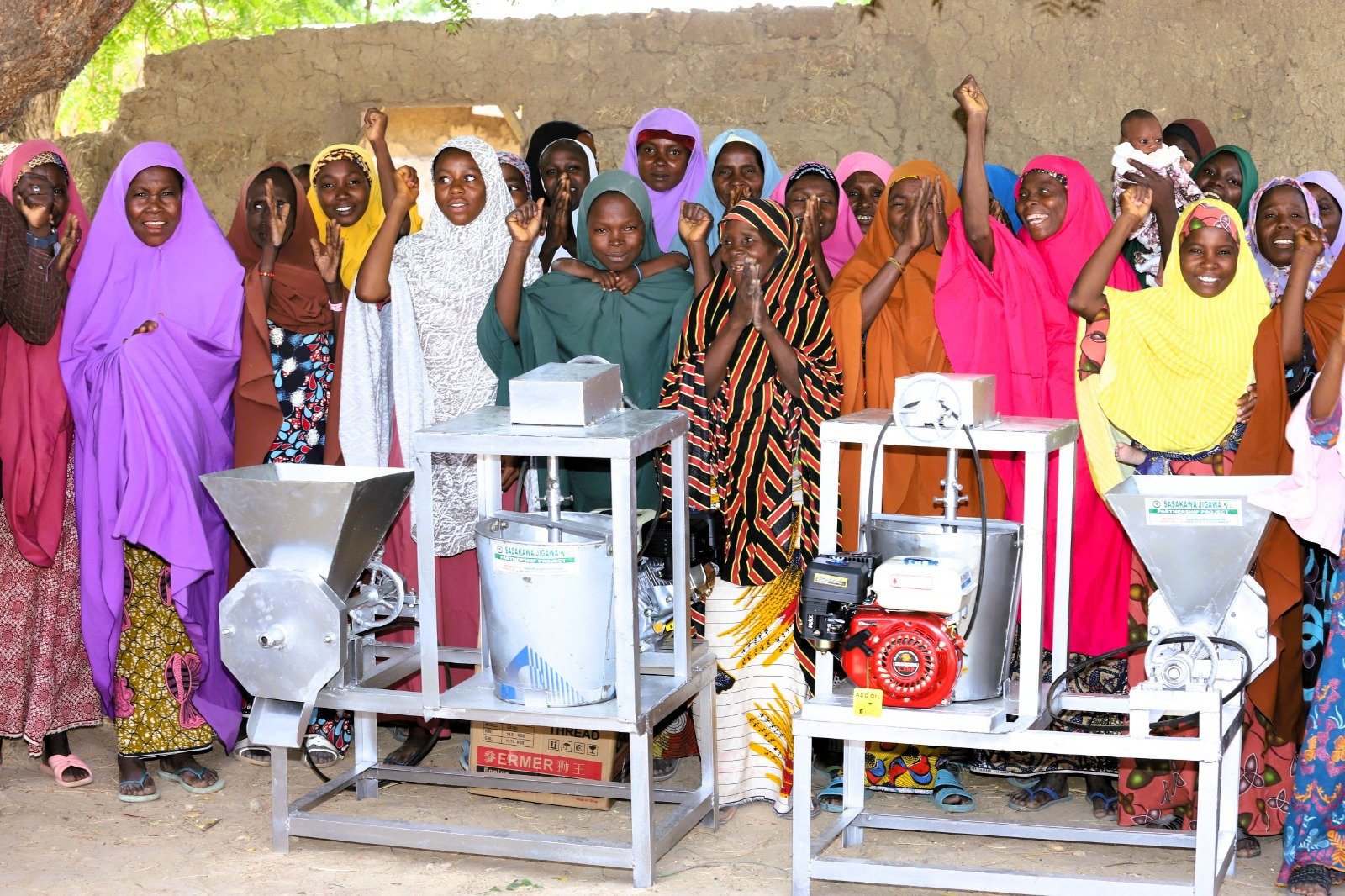
For years, Fatima Dayyabu’s journey after harvest was often more difficult than cultivating her groundnut farm.
Like many women in Yanfari community of Taura Local Government Area of Jigawa State, she spent long hours travelling to distant towns in search of processing facilities, only to return home with reduced profits after spending money on transportation and processing fees.
Today, that struggle is gradually becoming a thing of the past.
Fatima is among hundreds of smallholder farmers benefiting from a partnership between the Sasakawa Africa Association (SAA) and the Jigawa State Government aimed at strengthening agricultural value chains through the provision of modern processing equipment and climate-smart technologies.
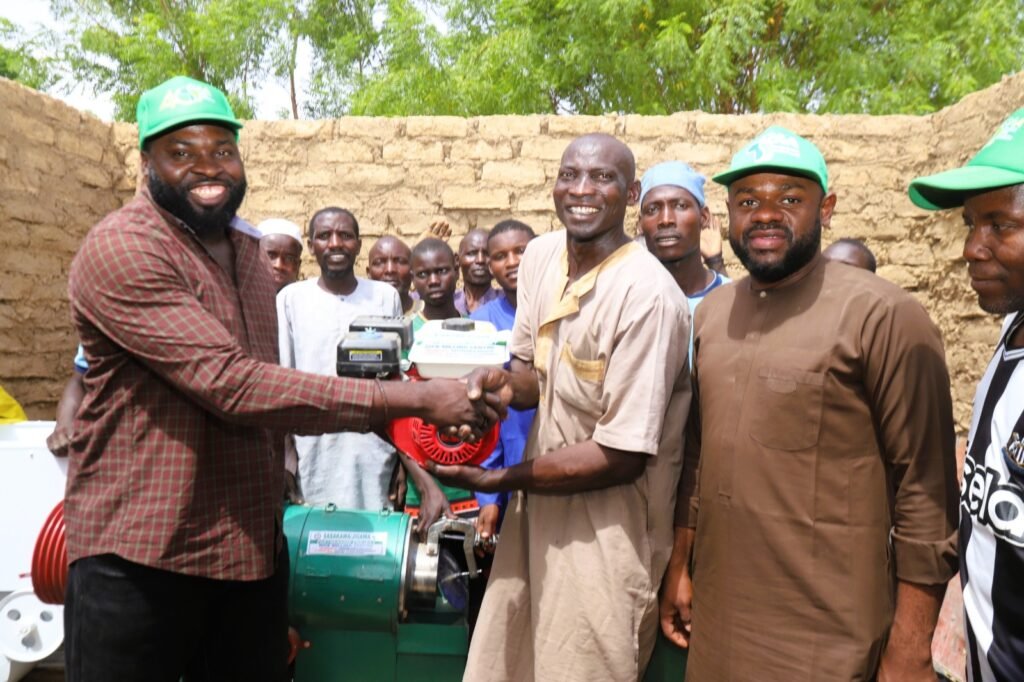
Under the initiative, 13 farmer groups across the state received value-added agricultural machines, including groundnut oil extraction machines, rice milling equipment, cassava processing machines, multipurpose threshers and solar-powered irrigation pumps.
The intervention targets one of the biggest challenges facing rural farmers post-harvest losses and limited opportunities for value addition.
For communities where farming remains the primary source of livelihood, experts say the inability to process and store produce often erodes gains made during cultivation.
“We used to lose a lot of money and time travelling long distances to process our groundnuts,” Fatima told Daily Trust in Yanfari.
“Sometimes the delays affected the quality of our products. Now, with this machine in our community, we can process faster, save money and earn more.”
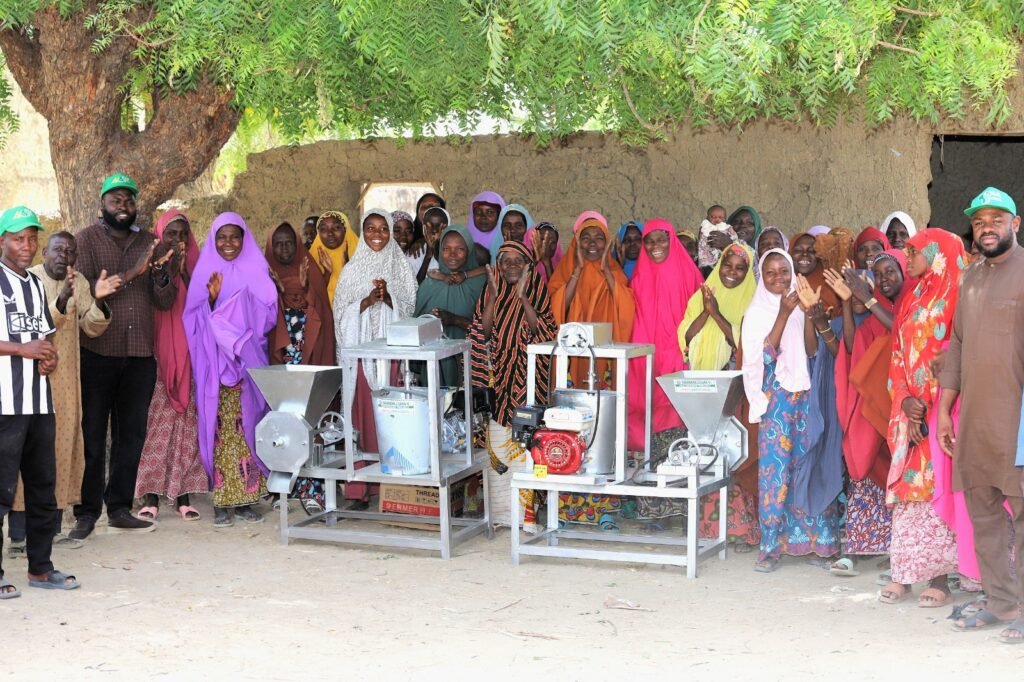
Her group, the Yanfari Groundnut Processing Group, is one of the beneficiaries of the project.
The equipment was distributed to organised farmer associations in communities across Gwaram, Birnin Kudu, Dutse, Taura, Ringim, Babura, Kirikasamma, Garki, Kafin Hausa and Hadejia local government areas.
Bridging the Missing Link
For more than three decades, SAA has worked with smallholder farmers across Nigeria, promoting climate-smart agriculture through improved seed varieties, extension services and training on good agronomic practices.
In Jigawa, the organisation has supported farmers in adopting improved varieties of wheat, maize, rice, sorghum and soybean, helping many increase yields despite erratic weather conditions linked to climate change.
However, agricultural experts note that increased production alone does not automatically translate into higher incomes.
Without proper storage, processing and market access, a significant portion of harvested crops is often lost to spoilage or sold at low prices.
According to the Project Lead of the SAA-Jigawa Partnership Project, Mr Albert Taru Mathias, the latest intervention was designed to address that gap.
“For three decades, SAA has worked with farmers to improve productivity through improved seeds, climate-smart practices and strengthened extension support. But increasing production alone is not enough,” he said.
“If farmers cannot preserve, process and add value to what they produce, post-harvest losses will continue to erode their gains. These technologies will help translate improved production into better incomes, enhanced nutrition and stronger resilience for farming households.”
He explained that beneficiary groups were selected based on their agricultural enterprises and demonstrated commitment by providing shelters and secure locations to house the equipment.
Women See New Opportunities
For many women farmers and processors, the machines represent more than improved efficiency; they symbolize economic independence and hope.
Mrs Umma K. Adamu of the Hammayayi Groundnut Processors Association in Dutse said access to local processing facilities would significantly improve the group’s productivity.
“We used to process groundnuts under very difficult conditions,” she said.
“Sometimes we travelled far to access processing services. It consumed our time and reduced our earnings. With this machine, we can improve product quality and support our families better.”
She believes the intervention will also create employment opportunities for young women within the community.
Similarly, Fatima said her group now plans to expand production and engage more women in processing activities.
“This support has restored our confidence,” she said.
“We are no longer worried about transportation costs and delays. We can now focus on growing our business and helping other women earn an income.”
Building Resilient Rural Economies
Beyond income generation, development experts say improved processing technologies play a crucial role in food security and nutrition.
By reducing spoilage and preserving the quality of agricultural produce, households are able to retain more food for consumption and improve dietary diversity.
The solar-powered irrigation pumps distributed under the project are also expected to boost dry-season farming, helping farmers adapt to changing climatic conditions and maintain production throughout the year.
Agricultural economists note that such interventions are increasingly important as rural communities contend with rising production costs, climate-related shocks and shrinking profit margins.
By enabling farmers to process products closer to home, communities can retain more value locally while improving their competitiveness in the marketplace.
A Step Towards Rural Transformation
Stakeholders say the initiative demonstrates the importance of addressing agriculture as a complete value chain rather than focusing solely on production.
The project combines improved seeds, climate-smart farming practices, nutrition-sensitive agriculture, post-harvest management and market-oriented value addition.
For the beneficiaries, however, the impact is more personal.
In Yanfari, the hum of a newly installed groundnut processing machine now signals more than technological progress.
For women like Fatima Dayyabu, it represents the possibility of turning hard work into lasting prosperity.
And for many rural households across Jigawa, it marks a new chapter in which the fruits of their labour are no longer lost after harvest but transformed into opportunities for growth, resilience and a better future.