
By Ali Rabiu Ali, Dutse
For more than two decades, residents of Gidan Na-ari, a remote agrarian community a few kilometres from Ringim Local Government of Jigawa State, lived with the daily struggle of finding water.
Every morning, women and children embarked on long journeys to neighbouring communities in search of the precious commodity. For some families, fetching water meant spending several hours away from home, while children often arrived late at school or abandoned their education altogether. But for the residents of Gidan Na-ari, that painful chapter is beginning to close.
Tears of happiness flowed from the eyes of the village head, Abdulwahab Ya’u, when a solar-powered borehole and backup hand pump were commissioned in the community through the intervention of the British American Tobacco Nigeria Foundation (BATN Foundation), in collaboration with the Jigawa State Government.
For Ya’u, the project represents much more than a source of water.
He said the community had endured water scarcity for about 20 years, forcing residents to travel several kilometres to neighbouring communities before they could obtain water for drinking, cooking and other domestic activities.
According to him, the situation placed a heavy burden on both adults and children. “Before now, we normally travelled several kilometres to fetch water from neighbouring communities. Our children and women suffered a lot before they could get water,” he said.
The village head could hardly hide his emotion as he described the arrival of the water project as a major turning point for the community.
For women such as Binta Ado, the hardship was even more personal.
She recalled how leaving home early in the morning to fetch water did not guarantee an early return.
“Whenever we went out to fetch water early in the morning, we normally spent hours before coming back. Sometimes, we returned around 9:30am, spending almost three hours,” she said.
Binta said the water crisis had affected the education of children in the community, particularly girls who were often involved in fetching water for their families.
“We suffered a lot. Our children did not normally go to school on time, and many of them eventually stopped going to school because of the lack of water in this village,” she said.
Now, she believes the new facility will give families more time to concentrate on education, farming and other productive activities.
Another resident, Kaltime Malam Idi, described water scarcity as one of the community’s biggest challenges.
“With this development, our suffering has come to an end. Water scarcity was about 50 per cent of our problems,” she said.
She expressed appreciation to the Jigawa State Government and BATN Foundation for bringing the project to the community.
Speaking at the commissioning of the project, Jigawa State Commissioner for Agriculture, Alhaji Mustapha Namadi, who represented Governor Umar Namadi, said the state government had already identified Gidan Na-ari among communities requiring water projects.
He explained that before the government commenced intervention in the area, the BATN Foundation approached the government and sought permission to implement the project.
He described the partnership as an example of how government and development organisations could work together to improve the lives of people in underserved communities.
“Water is life, and today we are turning that truth into reality. For too long, our mothers, children and elders have walked long distances in search of clean water,” Namadi said.
“Today, that burden is being lifted. This solar-powered water system is more than a borehole; it is health, it is time saved and it is dignity restored.”
The commissioner said the solar-powered system would provide a sustainable and environmentally friendly source of clean water throughout the year.
He added that access to safe water would help reduce waterborne diseases, give children more time to attend school and allow women to devote more time to productive economic activities.
Namadi commended BATN Foundation for its continued commitment to development in Jigawa State, recalling that the foundation had implemented several projects across different local government areas of the state in previous years.
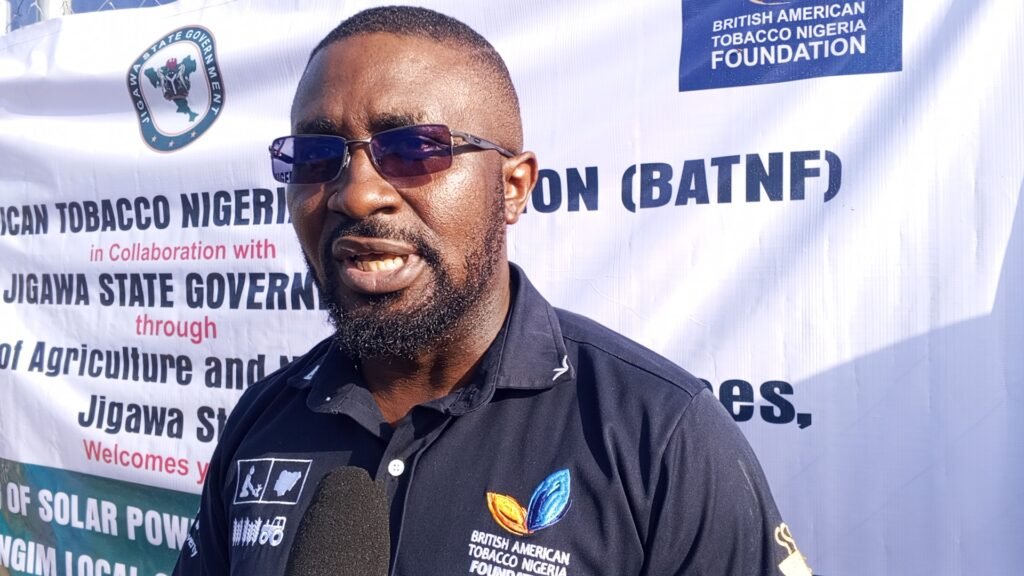
The Project Manager of BATN Foundation, Mr Adetola Oniyelu, who represented the foundation’s General Manager, Oludare Odusanya, said the project was part of the organisation’s long-standing commitment to improving livelihoods in underserved rural communities across Nigeria.
He said the foundation had remained committed to sustainable development interventions for more than two decades.
Oniyelu said the Gidan Na-ari facility comprises a 20,000-litre water storage system, solar-powered pumping infrastructure, five water dispensing points and a backup manual pump.
According to him, the facility was designed to provide reliable access to clean and safe water while supporting the use of renewable energy.
He linked the project to the Sustainable Development Goals, particularly the goal on clean water and sanitation.
“At BATN Foundation, we believe that access to clean water is fundamental to health, dignity, productivity and economic growth,” he said.
He explained that investments in water infrastructure were designed not only to address immediate needs but also to strengthen community resilience and support long-term development.
Oniyelu acknowledged the contribution of the project’s implementation partner, Eco Lead Imperial Engineering and Global Services, as well as community leaders, government representatives and residents of Gidan Na-ari for their cooperation.
He urged the community to take ownership of the facility and protect it to ensure that it continues to serve future generations.
“To the people of this community, the facility belongs to you. We encourage you to take ownership of it, protect it and ensure it serves generations to come,” he said.
The Programme Manager of Eco Lead Imperial Engineering and Global Services, the company that implemented the project, Dr Umar Abdullahi Maina, commended Governor Umar Namadi for what he described as an open-door policy that allows non-governmental organisations and private companies to bring development projects to communities across the state.
Maina said such partnerships could complement government efforts and accelerate development, particularly in rural and underserved communities.
He also appealed to the people of Gidan Na-ari to regard the facility as their own and ensure its proper maintenance.
“The project does not belong to the government, the commissioner, the partners, me or any other individual. It belongs to the community,” Maina said.
He urged residents to maintain the facility carefully so that it would continue functioning and benefit their children and grandchildren.
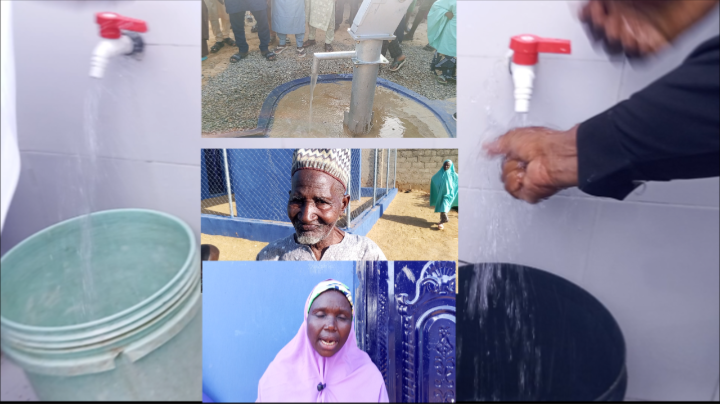
For the people of Gidan Na-ari, the sound of water flowing from the new solar-powered borehole carries a meaning far beyond convenience.
It represents fewer hours spent walking in search of water, fewer school days lost by children, less physical hardship for women and a renewed sense of dignity for a community that spent more than 20 years waiting for a reliable source of water.
After years of walking for water, Gidan Na-ari can now look towards a future where water is available closer to home and where children can spend their mornings in classrooms rather than on long journeys carrying water.